Each year, with the arrival of the coldest months, the news alerts us to tragic cases of gas poisoning in homes. In the vast majority of these situations, the direct culprit is **carbon monoxide (CO)**.
Unlike normal smoke, carbon monoxide cannot be seen, has no smell, no taste, and does not irritate the respiratory tract. It is, literally, a **silent enemy**. In this article, we explain how it is produced in fireplaces and boilers and what steps you should follow to completely eliminate this danger in your home.
How is carbon monoxide generated?
Carbon monoxide is a gas byproduct of combustion. When we burn materials such as wood, coal, gas, diesel, or pellets, fire is produced. If the combustion is perfect (with plenty of oxygen), the gaseous residue is carbon dioxide (CO2), which is harmless in normal concentrations.
However, if the fire does not receive a sufficient supply of oxygen (incomplete combustion) or if the flue does not evacuate the gases at the appropriate speed, the combustion generates carbon monoxide (CO). This gas is a cellular chemical poison: when inhaled, it binds to the blood's hemoglobin 200 times faster than oxygen, suffocating the body's cells from within.
"Carbon monoxide acts by putting its victims to sleep. In high concentrations, a person can lose consciousness in a few minutes without having perceived any odor or prior feeling of choking."
Main causes of CO accumulation in fireplaces
In an installation that is perfectly maintained, carbon monoxide rises through the flue and disperses safely into the atmosphere. The real danger appears when mechanical or maintenance failures occur:
- Blocked chimney flue: The most frequent physical cause. Bird nests (jackdaws, pigeons), debris dislodged from the masonry lining, or an excessive accumulation of soot act as a plug in the pipe, causing toxic gases to blow back into the house.
- Poor ventilation and sealing: Modern homes, which are very well insulated and have airtight double-glazed windows, may lack the necessary ventilation grilles. When lighting the fireplace or turning on a powerful kitchen extractor hood, the house enters "negative pressure," sucking smoke and carbon monoxide from the fireplace back into the living room.
- Cracks in the flue pipes: A cracked flue (especially in old masonry fireplaces) can leak gases through walls into upstairs bedrooms or inhabited attics.
Symptoms of poisoning you must recognize
It is vital to identify the initial symptoms of CO inhalation before it is too late:
- Mild but persistent headache (the most common symptom).
- Nausea, vomiting, and general stomach upset.
- Dizziness, unexplained fatigue, and muscle weakness.
- Mental confusion, drowsiness, and disorientation.
If several people (or pets) in the same house start experiencing these symptoms simultaneously when lighting a fireplace or stove, **extinguish the fire immediately, open all windows, and go outside into the fresh air**.
What to do if a carbon monoxide leak is suspected
Leave the house immediately with your family. Once outside in a safe environment, call emergency services (112). Do not re-enter the house until firefighters or a qualified technician have ventilated the property and verified that the environment is safe.
Definitive prevention measures
Safety is non-negotiable. Protect your home by following these three golden rules:
- Annual mechanical sweeping and technical inspection: A professional chimney sweep must clean the flue with brushes and verify, using a telescopic video camera, that there are no internal cracks or bird nests blocking the flue.
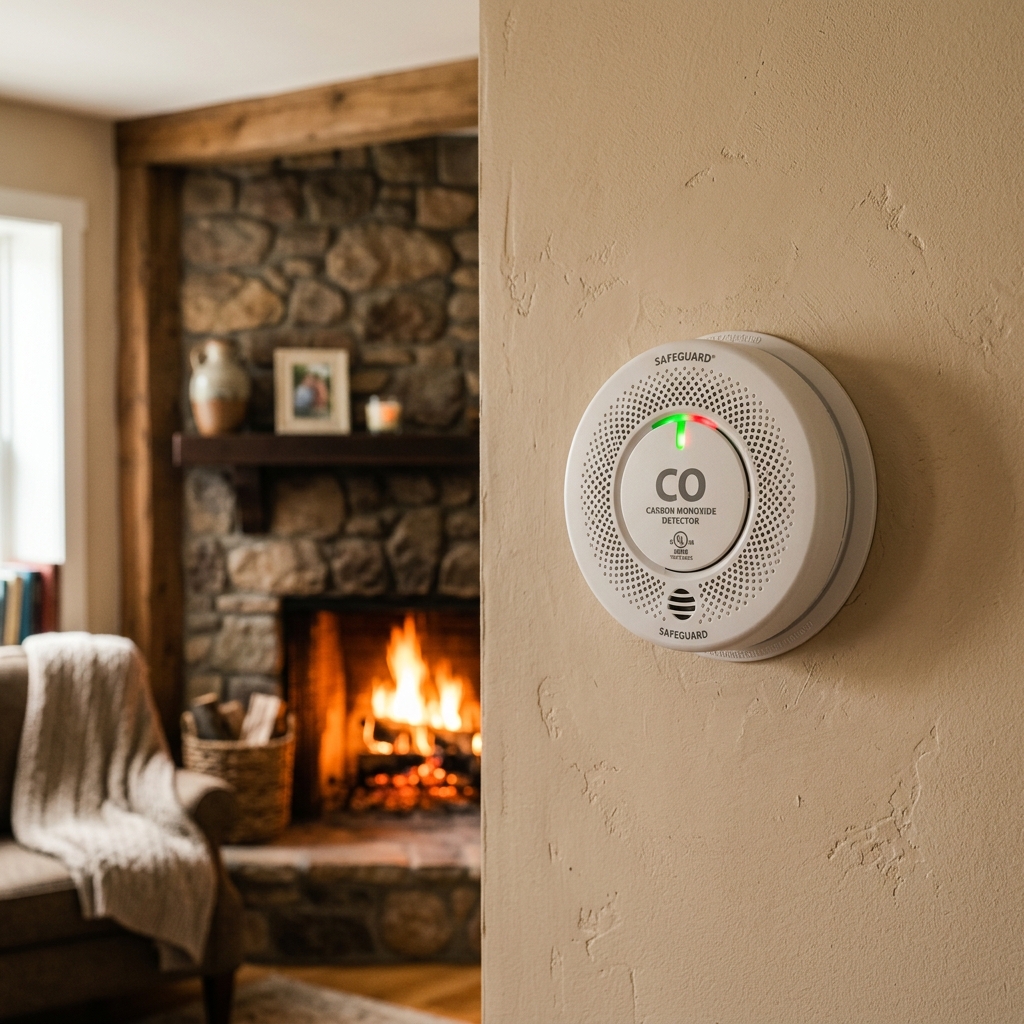
- Install carbon monoxide detectors: These are inexpensive battery-operated devices. You should install at least one in the hallway outside the bedrooms and at a recommended distance of between 1 and 3 meters from the fireplace or stove. Make sure to buy a model with European safety certification (EN 50291).
- Never cover ventilation grilles: Even if it is cold, the mandatory ventilation grilles in the room guarantee air renewal and prevent the house from entering negative pressure.
Remember: carbon monoxide detectors save lives by sounding the alarm, but **true safety lies in a clean and clear flue**.