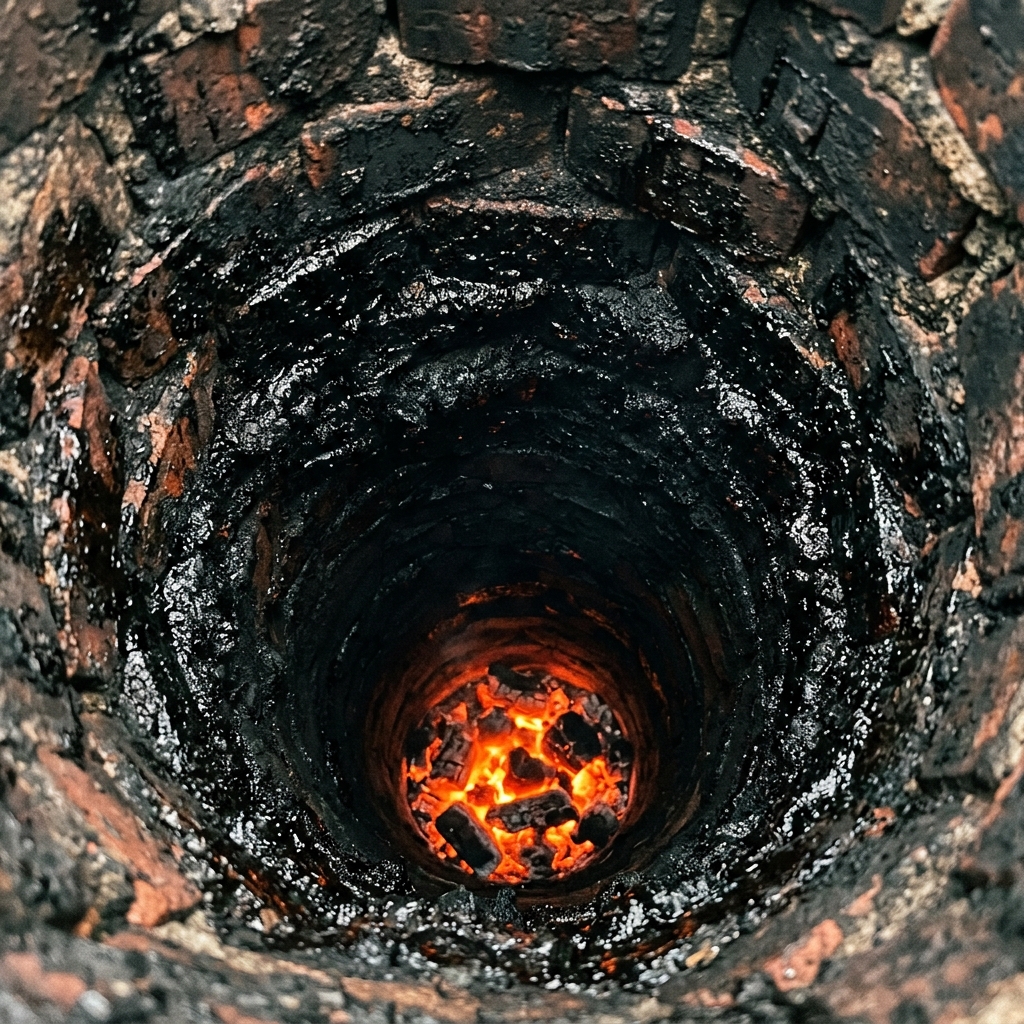
With the arrival of the cold winter, few things are as comforting as lighting the fireplace and enjoying its warmth. However, that cozy fire can turn into a terrible nightmare if we do not pay attention to the state of conservation of the flue. Behind the smoke hides the number one enemy of home safety: **creosote**.
In this article, we explain in depth what this substance is, how it originates in the flue, and what preventive measures you should take today to protect your family from a devastating chimney fire.
What is creosote and how does it form?
Creosote is a pasty, oily, and highly flammable chemical residue produced as a result of incomplete wood combustion. When burning firewood, volatile gases and water vapor are released. When these compounds rise through the flue and come into contact with the chimney walls (which are cooler, generally below 120°C), they rapidly condense, forming tarry deposits.
The rate at which this substance accumulates depends on the type of firewood used, the airflow (draft) of the chimney, and the internal temperature of the flue.
"A chimney fire fueled by creosote can quickly exceed temperatures of 1000°C, cracking bricks, melting steel flues, and spreading the fire to the wooden structure of the home in a matter of minutes."
The Three Stages of Creosote
Professionals classify creosote accumulation into three physical states or stages, each more dangerous and difficult to remove than the last:
- Stage 1 (Loose Soot): It is a matte black, fine, and velvety powder. It occurs when the fire has sufficient airflow. It is very easy to remove using standard chimney brushes.
- Stage 2 (Flaky Creosote): The soot condenses, forming black, shiny flakes that resemble burnt coal. It contains a higher amount of tar. Removing it requires stiffer steel brushes and considerable physical effort.
- Stage 3 (Glazed Creosote): This is the most dangerous stage. It appears as a hard, shiny, and sticky crust similar to asphalt lining the inside of the flue. It is caused by burning wet wood or severely restricting the airflow. It is extremely flammable and difficult to remove, often requiring special mechanical scrapers or professional chemical softening agents.
Warning Signs That Your Chimney is Accumulating Creosote
Although most of the accumulation is invisible from the living room, there are certain clear warning signs that you should not ignore:
- Difficulty lighting the fire: If you notice that the chimney is struggling to draw and the fire constantly goes out, the internal cross-section of the flue has likely narrowed due to creosote.
- Smoke backtracking: If smoke enters the room when lighting or stoking the fire, there is a physical obstruction or insufficient draft.
- Intense smell of asphalt or tar: When the fireplace is off, a strong and persistent smell of burnt soot in the living room indicates a significant accumulation of damp residue.
- Popping or cracking sounds in the flue: Hearing strange noises similar to burning paper or small pops inside the pipe indicates that small crusts of creosote are overheating.
Warning: Chimney Fire!
If you hear a loud roar resembling a jet engine coming from the flue and see sparks or intense flames on the roof, your chimney is on fire. Call the emergency services (112) immediately and close the appliance's air intakes if it is safe to do so.
Practical Tips to Prevent Creosote
Slowing down the rate at which this resin accumulates in the flue is possible if you follow these key guidelines:
- Burn only seasoned, dry wood: Firewood should have been seasoned under cover for 12 to 24 months. Green or wet wood wastes its energy evaporating water, cooling the combustion gases and drastically accelerating condensation.
- Avoid softwoods and resinous woods: Pine and fir contain high concentrations of resins that produce thick black smoke loaded with tar. Always opt for hardwoods such as holm oak, oak, or olive.
- Keep fires bright and hot: Do not choke the draft by fully closing the air regulators to make the wood last longer. Slow, smoldering fires produce more smoke and cool the flue, promoting creosote formation.
- Periodic mechanical sweeping: No DIY trick or chemical product replaces the physical cleaning of the flue walls using a professional chimney brush. You should arrange for this to be done at least once every two years (or annually if used daily).
Keeping your chimney clean not only prevents devastating fires, but also optimizes the draft, ensuring you get the most out of every log of wood and keep your home safe and comfortable.